Key Takeaways
- Eco-friendly lawn solutions reduce water usage and chemical inputs, promoting a healthier environment.
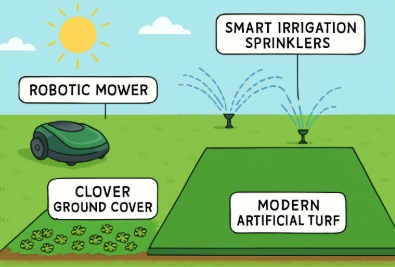
- Innovative technologies, such as robotic mowers and smart irrigation systems, enhance efficiency.
- Alternative ground covers, such as Miniclover, offer sustainable options.
- Advancements in artificial turf provide realistic and low-maintenance alternatives.
Homeowners, property managers, and landscapers are increasingly turning to sustainable solutions that strike a balance between the beauty of lush lawns and the responsibility of environmental stewardship. Gone are the days when maintaining a picture-perfect green space meant excessive water use, heavy doses of chemical fertilizers, and hours of manual labor. Today’s breakthroughs in eco-friendly landscaping offer alternatives that minimize environmental impact, conserve resources, and provide long-term benefits. Whether you’re looking for new landscaping technology or exploring options like hydroseeding cost Southern California, understanding the latest innovations that help you create a green lawn that’s as sustainable as it is visually appealing is key.
Modern lawn care innovations include robotic mowers, smart irrigation, climate-adapted ground covers, and improved artificial turf. These solutions boost aesthetics, reduce water waste, lower emissions, and cut chemical use. As water restrictions and environmental concerns grow, eco-friendly options are gaining popularity in residential and commercial areas.
The move toward responsible lawn solutions allows homeowners to find region-specific products and services. Technologies once niche are now accessible, making sustainable landscaping achievable for all.
Adopting these methods saves time and costs and helps protect the planet without sacrificing outdoor space quality.
Sustainable Lawn Care Practices
Traditional lawn care models often rely on outdated methods that waste water, degrade soil health, and introduce harmful chemicals into local ecosystems. Sustainable lawn care practices aim to remedy these issues by focusing on organic methods, resource conservation, and ecosystem balance. For example, using compost-based soil amendments not only nourishes the earth naturally but also supports beneficial microbes that boost turf resilience and pest resistance.
Supplementing lawns with organic or slow-release fertilizers further reduces the chemical runoff that can harm nearby waterways and wildlife. Key practices also include maintaining proper mowing heights, aeration, and allowing grass clippings to decompose naturally, thereby returning valuable nutrients to the soil. These steps result in vibrant lawns that require fewer inputs and offer longer-lasting visual appeal.
Robotic Lawn Mowers
One of the standout breakthroughs in sustainable landscaping is the arrival of robotic lawn mowers. Powered by rechargeable batteries, these devices glide quietly across lawns, trimming grass efficiently without the fumes, noise, or vibration of gas-powered models. By eliminating the need for gasoline engines, robotic mowers significantly reduce the carbon emissions associated with routine yard work.
Beyond their environmental credentials, robotic mowers can be programmed to operate during optimal times of day, working incrementally and consistently to maintain healthy turf. Many advanced models integrate with mobile apps and smart home systems, ensuring users save time while achieving professional-level lawn care with minimal intervention. As they become more common, these technologies are making eco-friendly landscaping more accessible than ever.
Smart Irrigation Systems
Inefficient irrigation practices often result in overwatering, leaching of soil nutrients, and the wasteful use of a precious resource. Enter smart irrigation systems—an intelligent solution that automates watering, factoring in real-time weather data, soil moisture levels, and even plant types. By adjusting watering schedules according to environmental conditions, these systems limit water use and cultivate happier, drought-tolerant lawns.
This technology is especially valuable in areas with frequent drought or unpredictable rainfall. Smart systems help property owners not only comply with local water restrictions but also save money. Major universities and environmental groups, such as the Environmental Protection Agency, strongly advocate for smart irrigation to address urban water conservation challenges.
Alternative Ground Covers
For those seeking a greener alternative to grass, sustainable ground covers deliver beautiful results with less maintenance. Plants like Miniclover, creeping thyme, and sedum offer dense, resilient coverage while requiring a fraction of the watering and mowing needed for conventional lawns. Miniclover, for example, naturally fixes nitrogen in the soil, allowing it to flourish without the need for chemical fertilizers.
Such ground covers resist pests, tolerate drought, and stay green through seasonal changes. They also provide food and habitat for pollinators, supporting broader ecological health. This makes them ideal for eco-conscious homeowners and anyone interested in increasing biodiversity while slashing maintenance time.
Advancements in Artificial Turf
Modern artificial turf has evolved significantly, offering a solution for property owners who desire green space but want to minimize water use and maintenance. The latest products use advanced polymers and layered designs to replicate the texture, feel, and color variation of natural grass. New drainage technologies also help prevent puddling and heat retention, making artificial turf a viable solution in many climates.
Quality artificial turf is durable and pet-friendly, standing up to heavy use without developing bare patches or compacted soil—concerns common in natural lawns. This alternative is now widely adopted in both residential yards and public spaces, where ongoing water and chemical savings accumulate over time.
Eco-Friendly Weed Control
Keeping lawns weed-free without resorting to harsh herbicides is a top priority in eco-friendly landscaping circles. Groundbreaking solutions now include the use of directed energy, such as targeted heat or lasers, to disrupt and destroy weeds at the root without disturbing nearby plants. Other systems use deep learning algorithms and computer vision to identify and selectively eliminate invasive species.
For DIY gardeners, methods such as soil solarization, mulching, and manual pulling, supplemented by organic pre-emergent treatments, can effectively reduce weed pressure. Integrating these new and old techniques results in a weed-suppressed, vibrant lawn that does not endanger children, pets, or local wildlife.
Integrating Technology in Landscaping
Artificial intelligence, what ‘sbotics are quickly reshaping what’s possible in landscape management. Projects such as the Ecological Laboratory for Urban Agriculture (ELUA) use advanced sensors and computational models to optimize urban green spaces for resource conservation, plant health, and biodiversity. These systems can adapt to changing conditions and user needs, demonstrating the future of responsive and sustainable landscaping at scale.
Thanks to these integrated technologies, businesses and homeowners can set ambitious sustainability goals with confidence, knowing they’ll benefit from real-time data, predictive analytics, and automated care systems for years to come.
Conclusion
Eco-friendly innovations in lawn establishment are transforming how we design and maintain outdoor spaces. By embracing sustainable practices, leveraging smart technology, and opting for water-wise alternatives, anyone can enjoy healthy, green lawns that support both environmental well-being and community aesthetics. The futurit’s lawn care is not only greener—it’s smarter, more efficient, and within reach for every property owner.